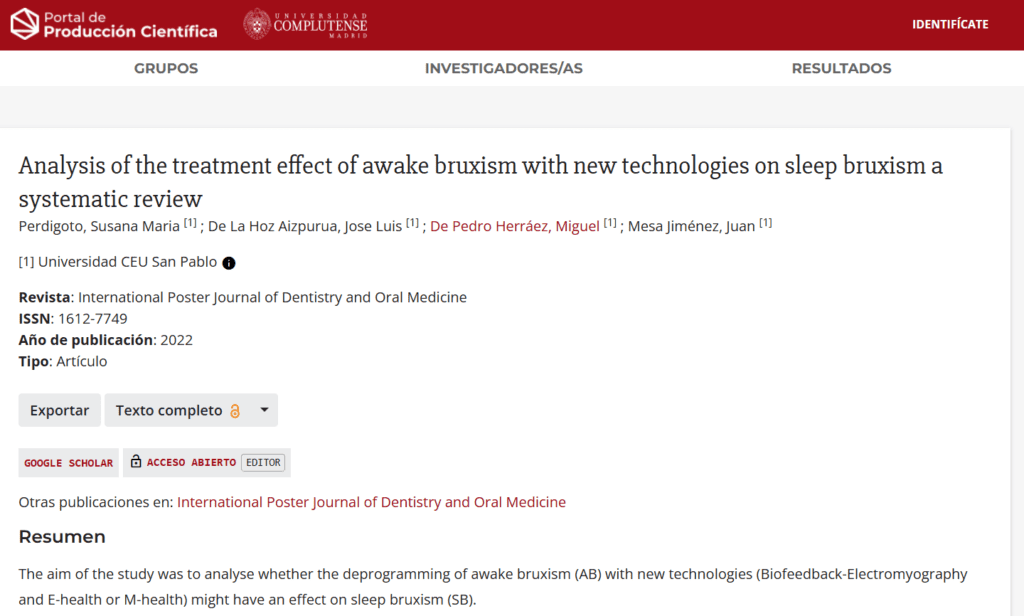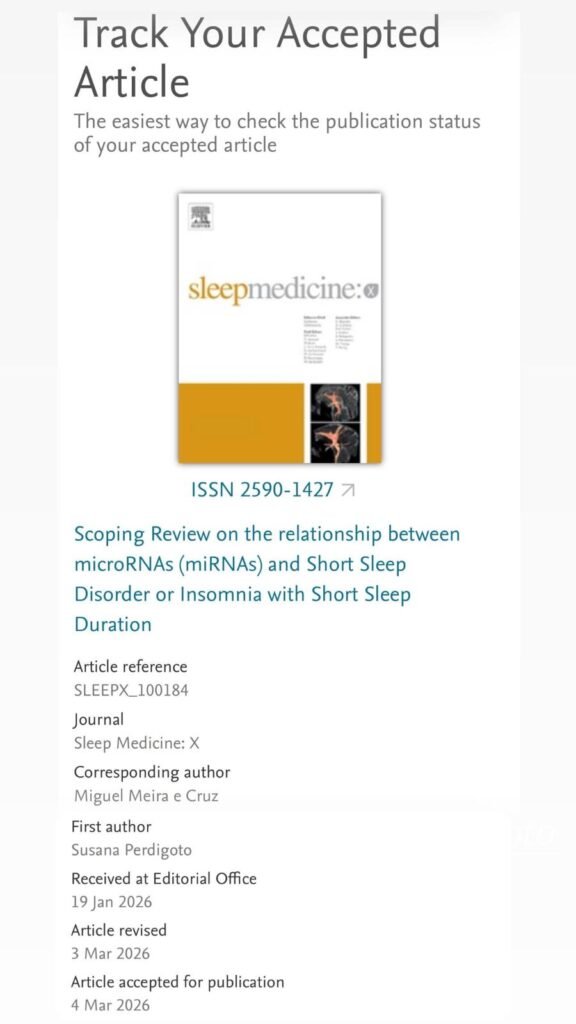

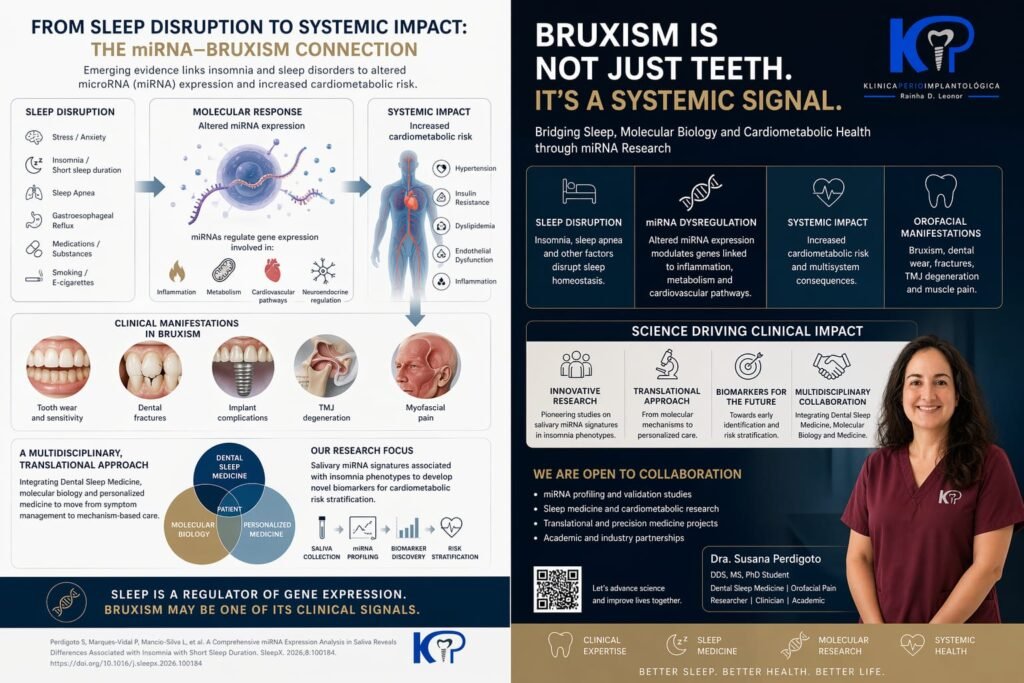
Bruxism should no longer be viewed solely as a peripheral oral condition. Increasing evidence supports its association with sleep disturbances, particularly insomnia with short sleep duration, a phenotype linked to heightened cardiometabolic risk.
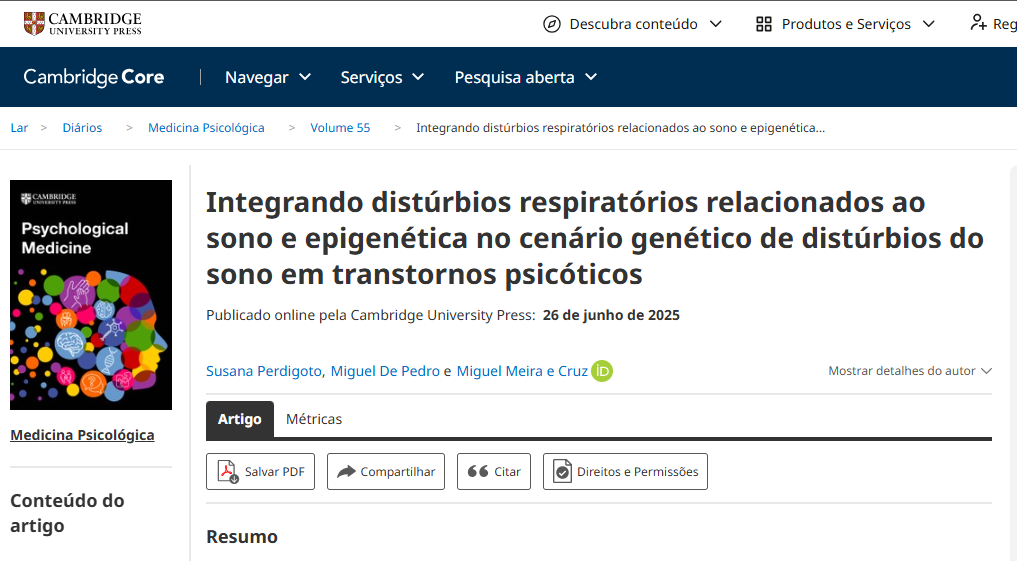
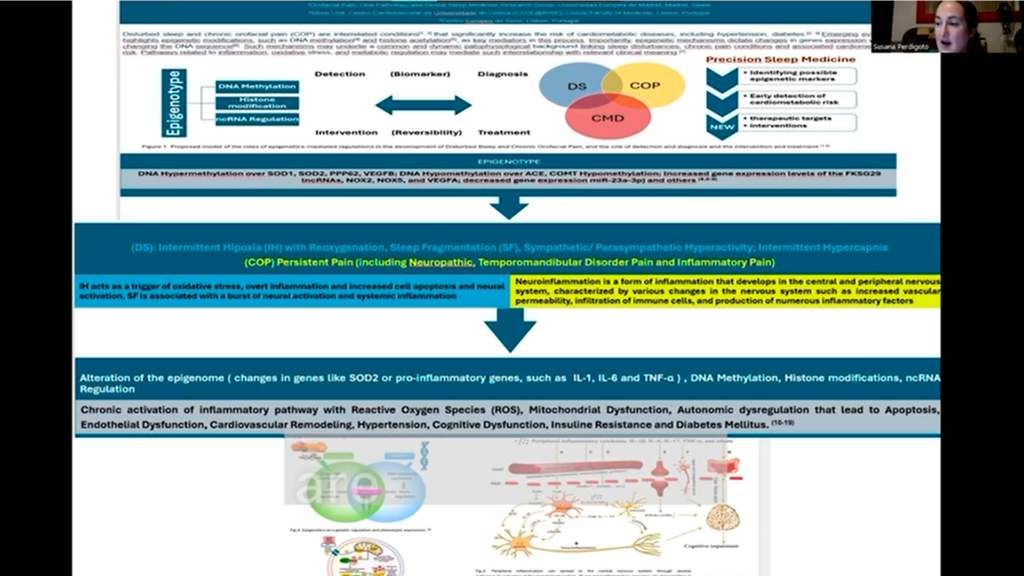
At the molecular level, microRNAs (miRNAs) — key post-transcriptional regulators of gene expression — are emerging as critical mediators between sleep disruption and systemic disease.
Recent findings indicate that even acute sleep deprivation may alter miRNA expression profiles, suggesting a rapid biological response with potential downstream effects on inflammation, metabolic regulation, and cardiovascular pathways.
Clinically, this systemic imbalance may manifest as:
- Tooth wear and fractures
- Implant complications
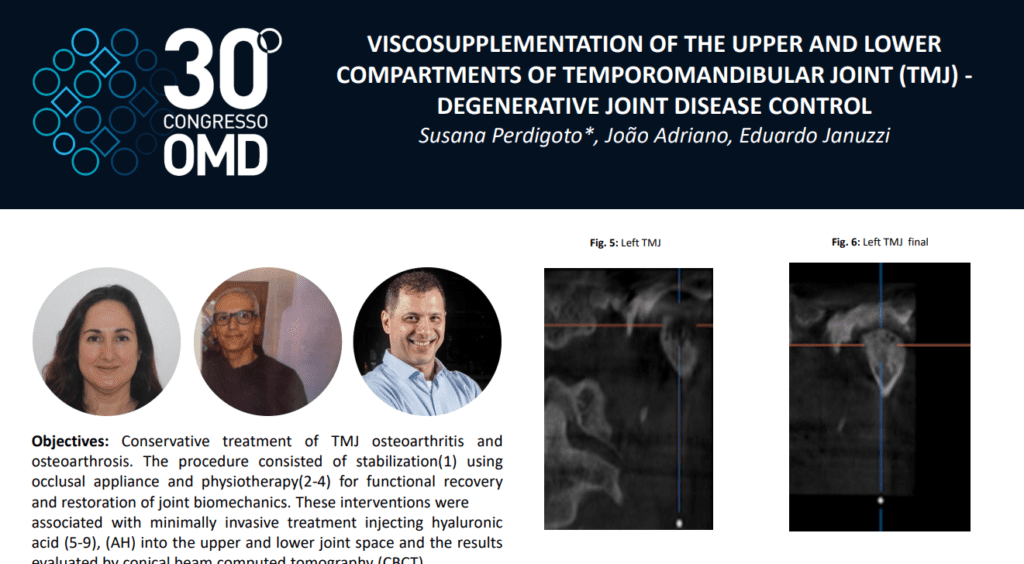
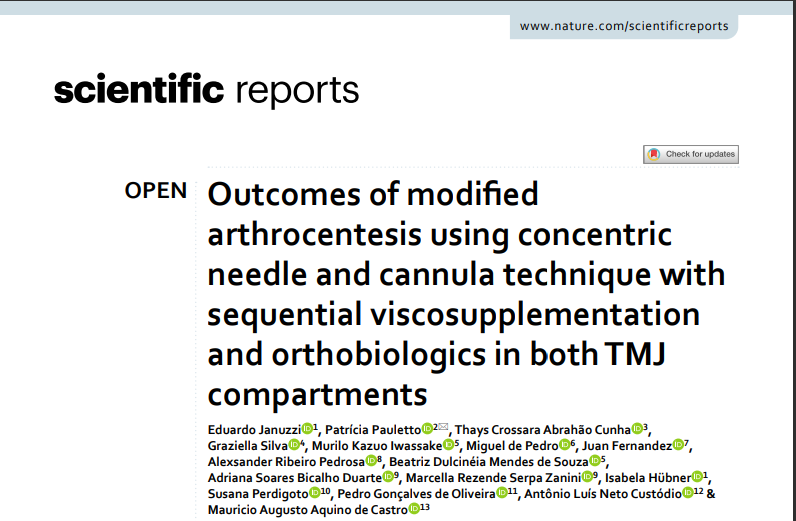
- Temporomandibular joint degeneration
- Myofascial pain
👉 These manifestations should be interpreted within a broader biopsychosocial and molecular framework, rather than as isolated dental findings.
A multidisciplinary, translational approach, integrating Dental Sleep Medicine, molecular biology, and personalized medicine, is essential to move from symptom management to mechanism-based care.
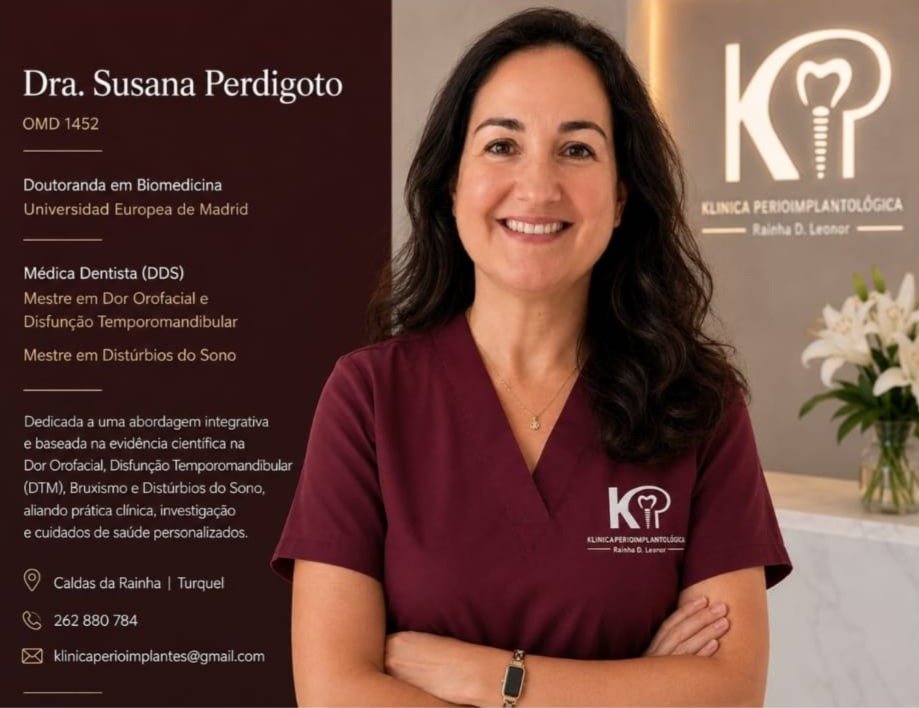
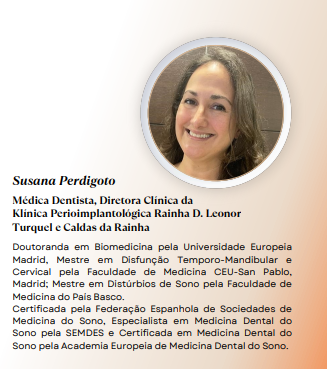
At Klinicaperioimplantologica Rainha D. Leonor (KPI), our research focuses on identifying salivary miRNA signatures associated with insomnia phenotypes, aiming to develop novel biomarkers for cardiometabolic risk stratification.
Sleep is a regulator of gene expression — and bruxism may be one of its clinical signals.
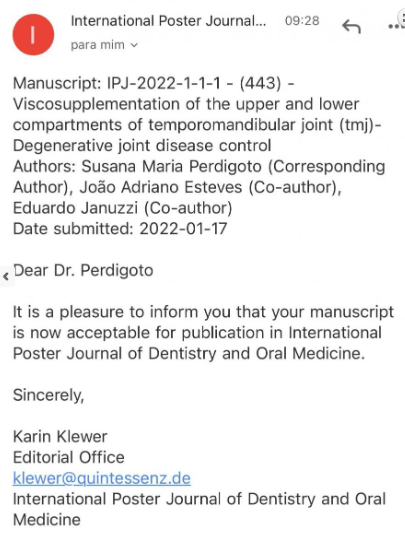
📖 DOI: 10.1016/j.sleepx.2026.100184